
20210507_11172716-9.jpg

Civil work tests and validates the shotcrete 3D printing process.

The man, the dog, the house in miniature, all created with a 3D printer – a familiar sight for us today. But what about a shotcrete 3D robot? cablex sees potential in this technology to provide the infrastructure required for network construction even faster.

Carolin Rabea Primerova 1-1
18.06.2021
Author Carolin Rabea Primerova

New shaft construction and reconstruction with shotcrete printing construction technology.

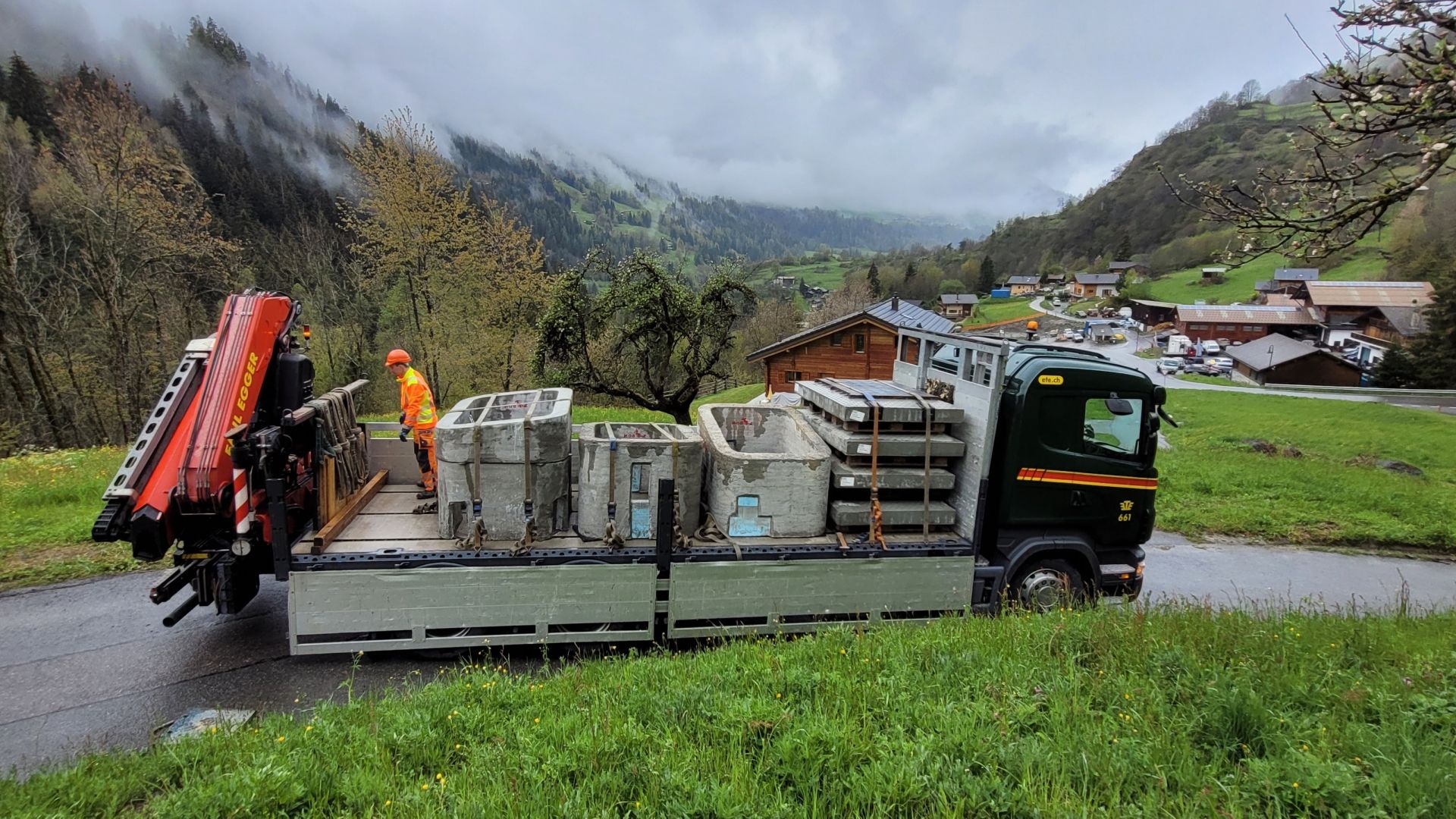
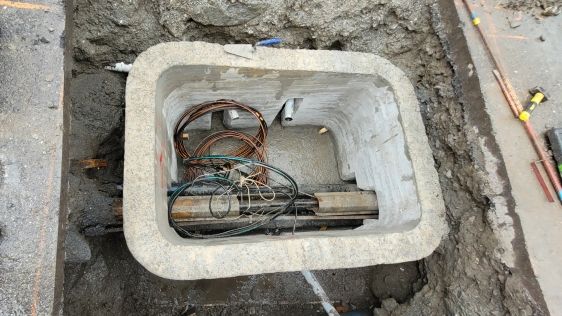
When carrying out network construction, it is always necessary to rebuild or reconstruct shafts.  cablex has tested and validated a new process technology that integrates the automation and robotics of shotcrete 3D printing. The shortcrete technology from MOBBOT, which cablex tested, allows wall reinforcements and new shafts to be produced individually and made-to-measure. The dimensions can be transmitted traditionally as drawings or created using an online configurator. An automated robot system spays the walls layer by layer. A wall reinforcement can be produced within 30 minutes and used on site after 24 hours.

The wall reinforcement is placed on top of the existing shaft, meaning that only the lateral compaction needs to be restored on site. Once this is done, the shaft frame can be put on and sealed. The conventional encasing work for concreting is eliminated and the resources consumption minimised.
01_Werkleitungsbau testet 3-D-Spritzbetondruck

When does it make sense for cablex to use it?

Whether shotcrete 3D printing makes sense depends on the quantity of wall reinforcements or shafts and their design. The method can save time from an order quantity of four elements. Due to the flexibility of 3D printing, recesses for cables and a gradient can be factored in directly during production. This means that the method is also suitable for use in more complex installations. 

Time comparison with traditional methods.

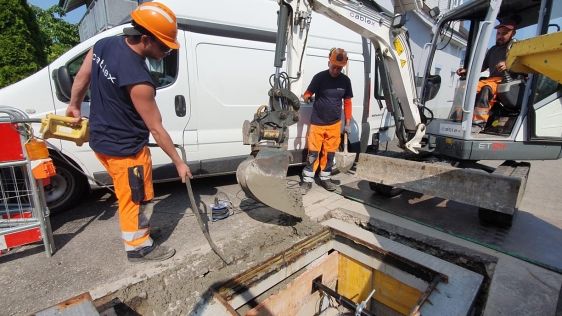
cablex uses two different production methods: The first is to place the shaft frame on sand-lime bricks and then concrete it. The second traditional shaft construction variant involves first concreting a wall reinforcement, onto which the shaft frame is placed in the next step.

Using conventional methods, a total of eight hours (two half days) are spent on forming, pouring and concreting. After the concrete has cured, the shaft frame and cover are applied. The employees then compact the remaining cavities with concrete. The wall thickness with this method is 20 centimetres.
02_Werkleitungsbau testet 3-D-Spritzbetondruck

In MOBBOT’s experience, it takes an average of between half an hour and an hour to install a 3D spray-printed wall reinforcement, including assembly of the shaft frame. This means that up to four shafts can be completed per day. The possibility of supplying wall reinforcements together with the associated shaft frames also offers savings potential in terms of transport routes.

The time required for excavation and restoration is comparable for the conventional and 3D methods. The printed wall reinforcement method requires a larger excavation (approximately twice the excavation for lateral backfilling and compaction). At the same time, MOBBOT says that shotcrete 3D printing uses around 25 per cent less concrete.

This method offers the greatest potential in rollout projects where several shafts have to be completed per week.

Abschluss26-24-9

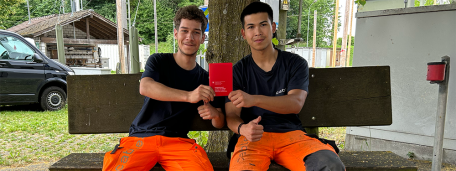
Congratulations to our graduating apprentices!

We would like to offer our warmest congratulations to our graduates on completing their training

Larissa Mihalik 1-1
16x9 ERIC EN

Internet and telephone services for remote areas. Eric on overground network infrastructure.

To many people, overhead lines seem like a relic of a bygone era. Yet even today, they remain an important part of Switzerland's telecommunications infrastructure.

Larissa Mihalik 1-1
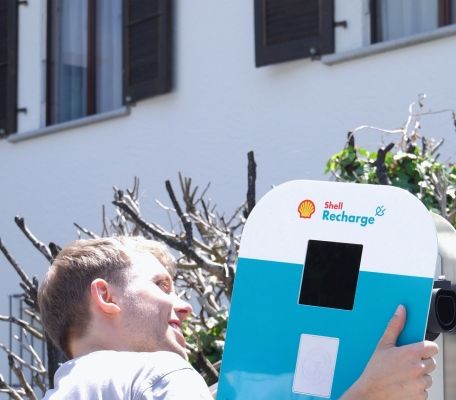
cablex Techniker vor Shell-Ladestation

Reference project for evpass AG: fast charging at Lake Thun

Installing EV charging infrastructure on third-party property is rarely straightforward. In Hünibach, cablex delivered two 66 kW fast chargers for evpass AG: direct grid connection, 42-metre crane, single-source project responsibility.

Carolin Rabea Primerova 1-1
Header_Netzbau_24-9

Electricity grid infrastructure for energy suppliers.

cablex designs, builds and modernises electricity grid infrastructures for energy suppliers and distribution system operators throughout Switzerland.

Signalmontage-16x9

Signal installation at Honeret: what takes shape behind the barriers.

For nine years, cablex has been renewing the Northern Bypass of Zurich — night after night, section by section. A look into the Honeret section.

Carolin Rabea Primerova 1-1
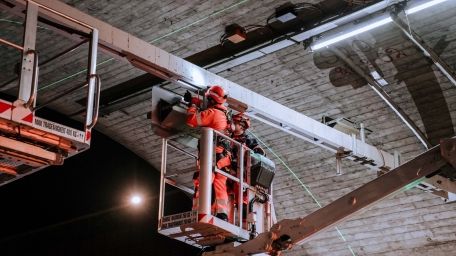
BUB-24x9

An infrastructure modernisation project with a vision for the future.

Bubenholz tunnel: cablex modernises the lighting in parallel with live operations – no disruption, future-proof ahead of the 2030 refurbishment.

Carolin Rabea Primerova 1-1
Copper Harvest 3-4

Copper has had its day – Switzerland is switching over.

cablex is turning the tables: instead of laying new lines, our teams are pulling old copper cables out of the ground throughout Switzerland.

Larissa Mihalik 1-1
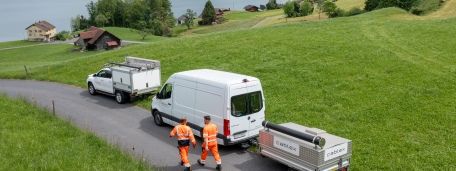
Zwei cablex Techniker beim Firmenwagen.

Fibre-optic power for your home.

Fast, uninterrupted Internet, digital television in top quality, and a reliable home office setup – optical fibre makes all this possible. On behalf of Swisscom, cablex brings this pioneering technology directly to your home.

Elektrischer LKW vor einer Ladestation

Construction of charging infrastructure for cars and HGVs.

cablex installs your charging infrastructure professionally – with practical examples that make technical and economic options transparent.

25 Jahre cablex

25 years of cablex – our anniversary year 2026 begins.

cablex celebrates 25 years of innovation, expertise and strong partnerships. Thank you for your trust!

Roger Keller, CEO bei cablex
cablex Techniker steht auf dem Dach mit den verlegten Solarpaneelen

Solar energy for the future: successful installation on the WMO building.

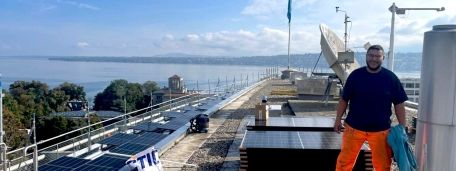
The extensive installation of 198 solar panels on the WMO building in Geneva offers a capacity of 92 kilowatts and contributes to a sustainable power supply.

Martina Strazzer 1-1

cablex AG

Tannackerstrasse 7

3073 Gümligen

cablex.info@cablex.ch

0800 222 444