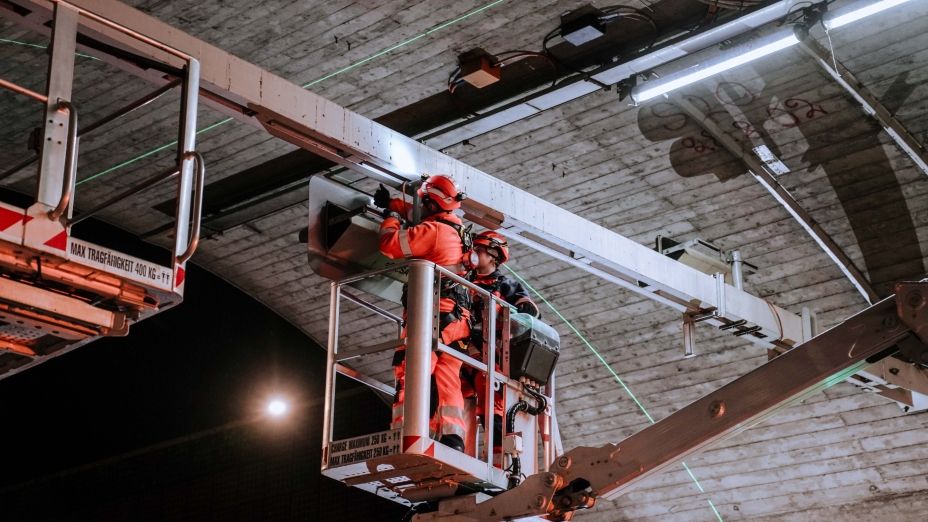
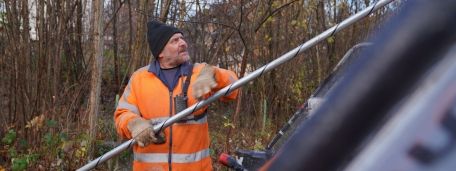
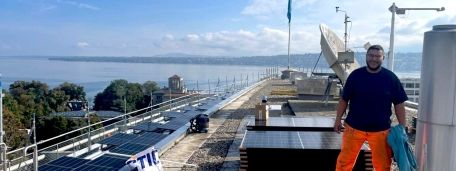
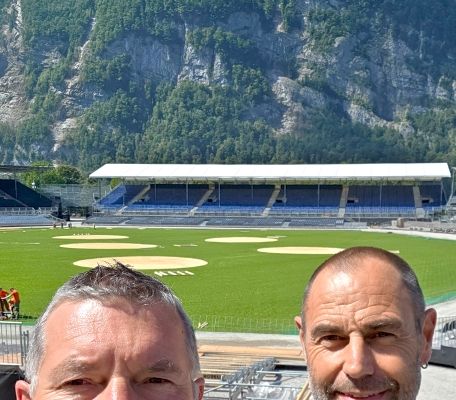
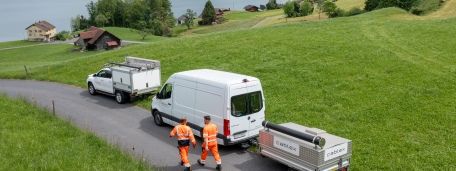
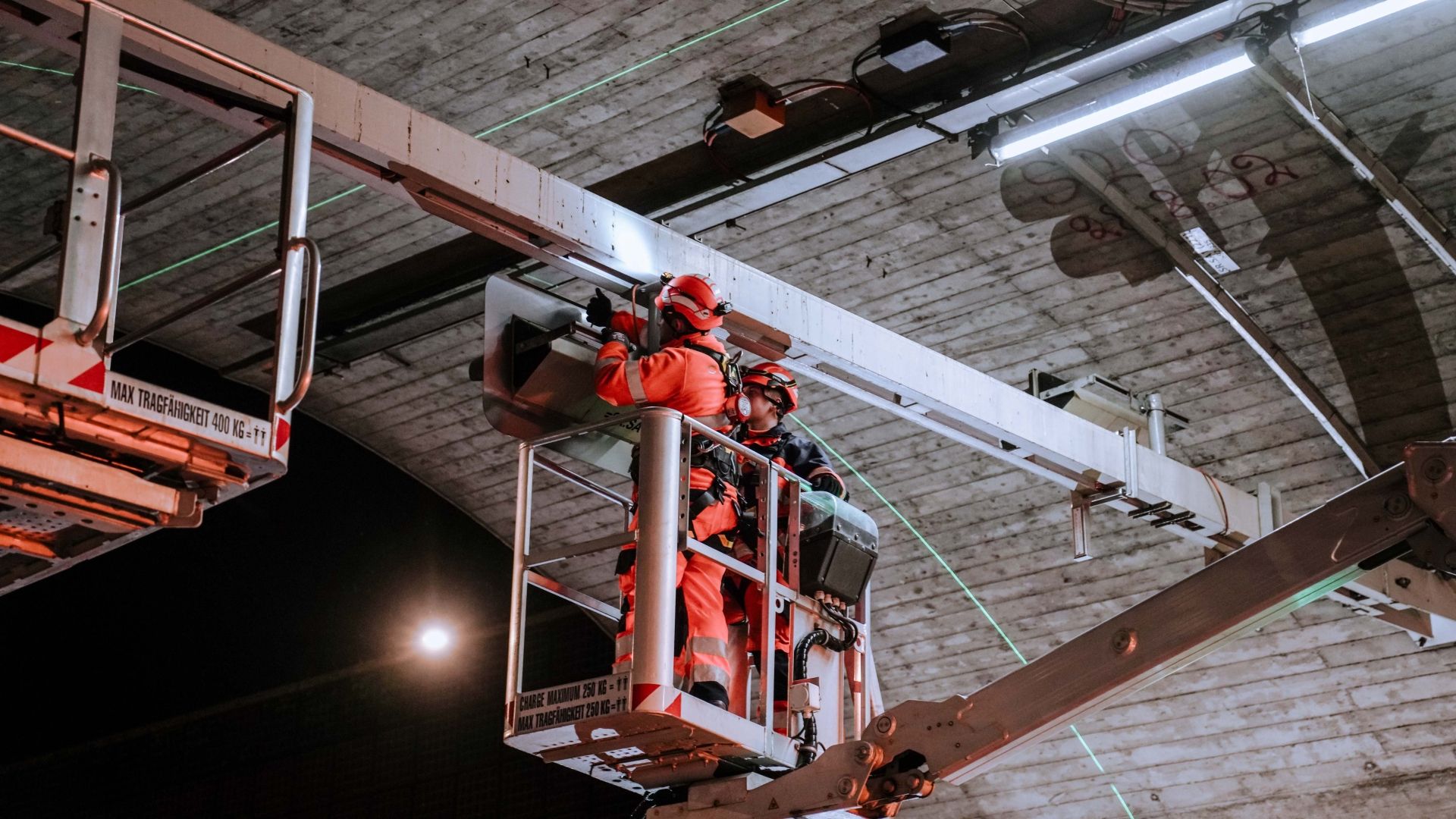
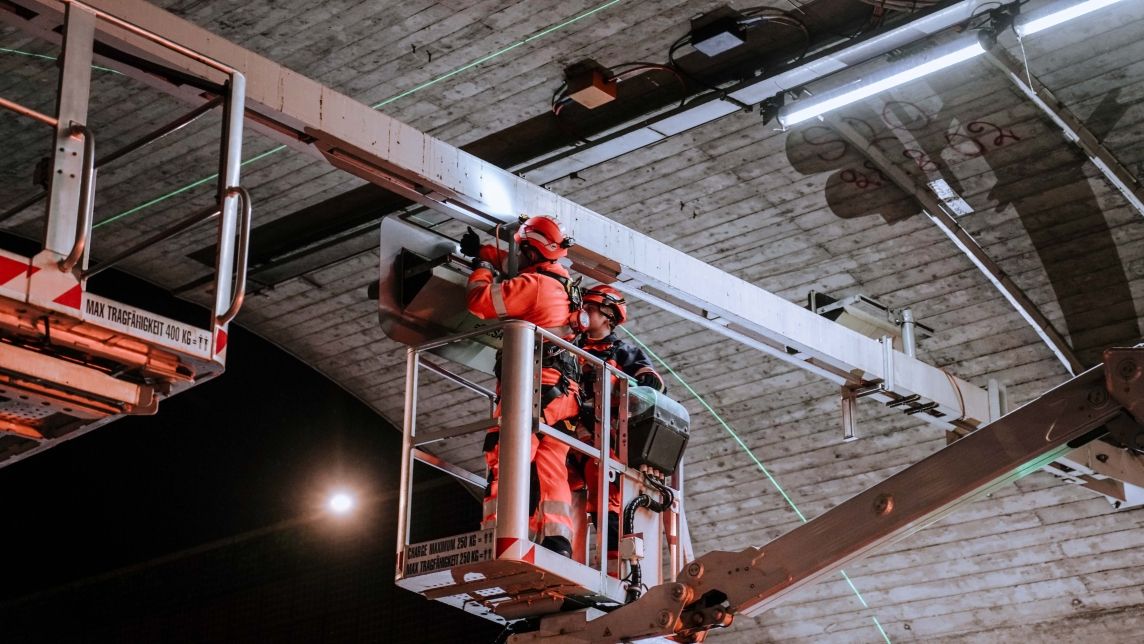
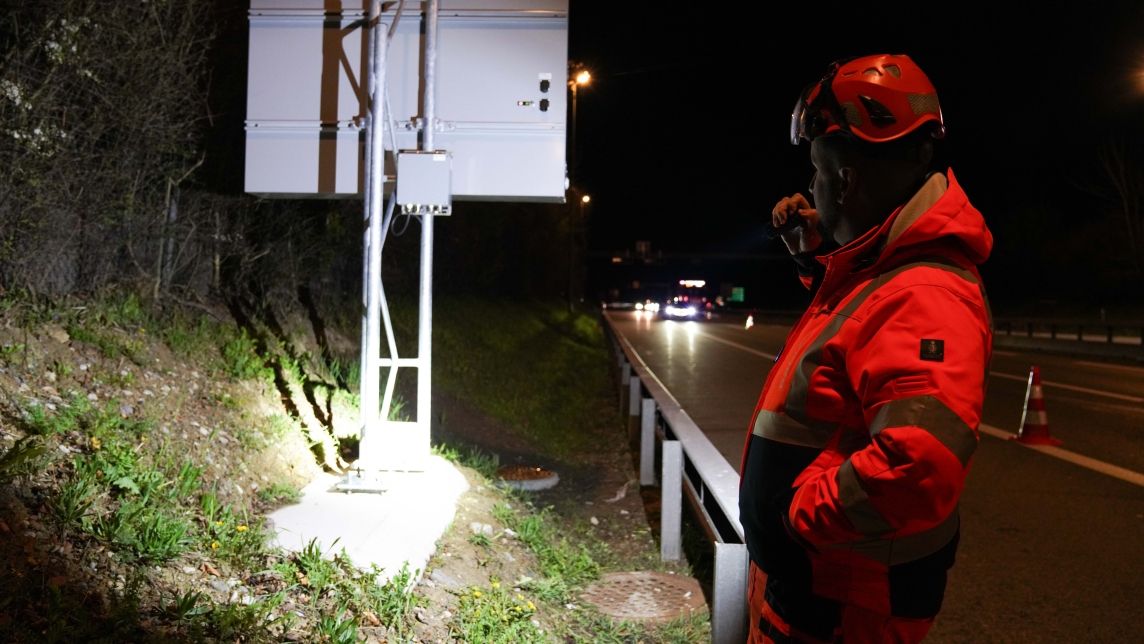
"In the hard-shoulder area, all cabling is prepared in advance to set up the closures scheduled for the night, during which the signals above the live traffic sections are also fitted. The junction boxes (distribution units) are already connected with the signal outputs. The cables on the gantries or bridges are then coiled and stored so they can be picked up during the night."


19.06.2026
A familiar signal — and work that road users never see.
You know the scene: an accident on the motorway, and seconds later the red X lights up above the closed lane. Camera, detector, fibre-optic network, control technology, traffic management centre, back to the signal — all in real time.
What makes the system so accessible is precisely what makes it invisible: it simply works. The signal appears. Traffic reacts. Congestion is defused. Accident scenes are signalled, lives are protected.
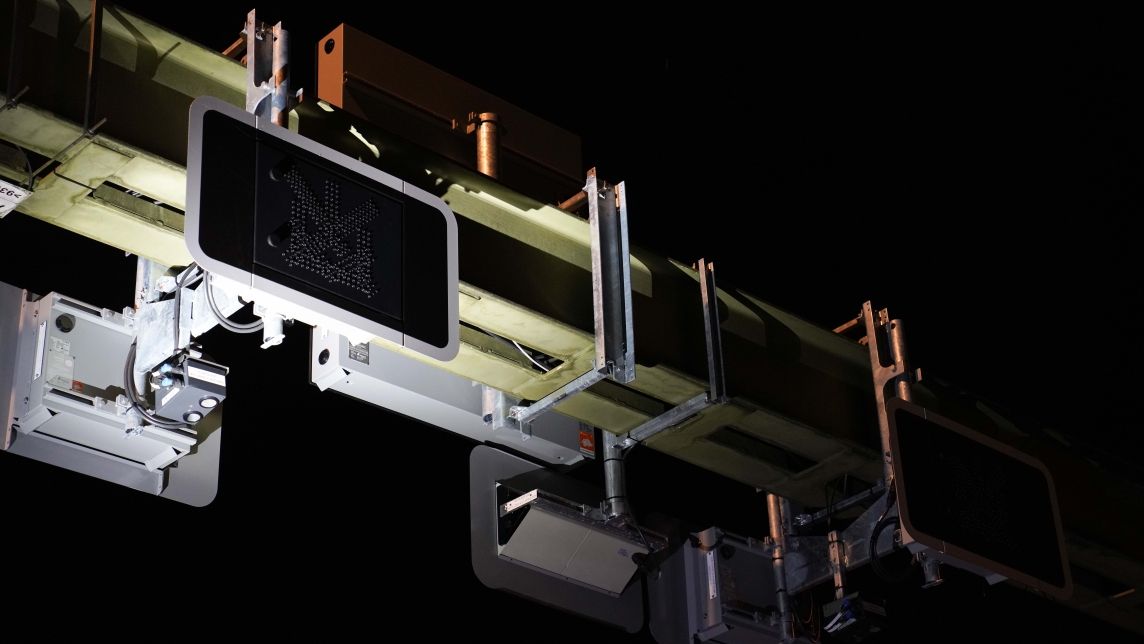
Open up one of these lane signals and you see what lies beneath its plain surface: hundreds of coloured wires — red for red signals, green for green. Precision-ground glass lenses focus the light so that the signal remains clearly visible both in bright outdoor conditions and deep inside the tunnel. A 230-volt supply powers the device, a power supply unit transforms it to 24–48 volts, and the control unit responds to the command of the higher-level traffic management system.
What looks like a compact metal housing high above the carriageway is the visible end of a long chain — and cablex delivers that entire chain.

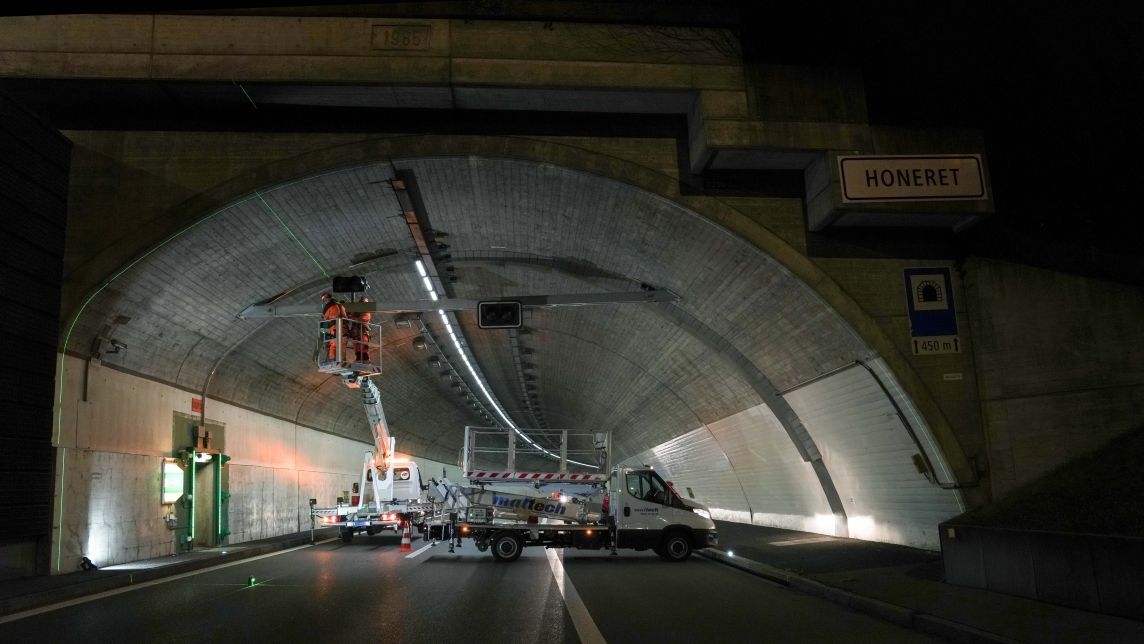
Around the clock — for months.
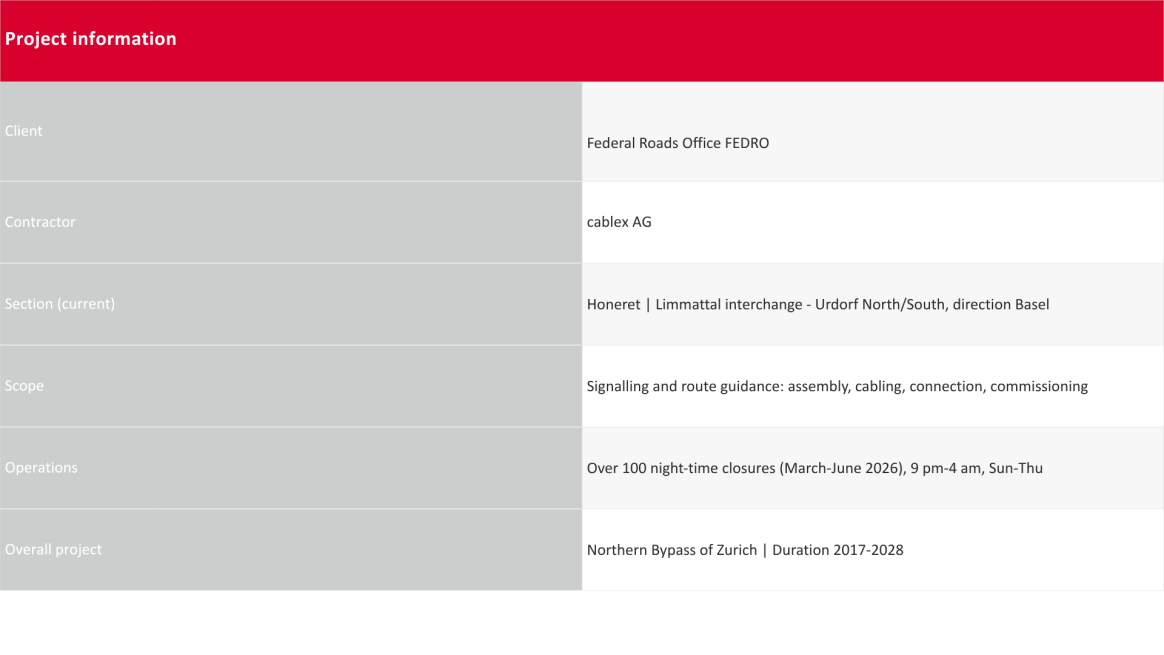
The Honeret section lies on the open stretch between the Limmattal interchange and Urdorf North and South — the last open-air section on which cablex is working in this major project. Next comes the renovation of the first Gubrist tube, with which the overall project ‘Comprehensive Renovation of the Zurich Northern Bypass’ will reach its conclusion.
Depending on the renovation phase, cablex works on the Honeret section either at night or during the day. Daytime work takes place on the hard shoulder, in parallel with flowing traffic and without any lane closures. Patrick Baumberger, project manager for the Honeret Tunnel, describes what is actually done there:
Patrick Baumberger, project manager Honeret Tunnel:
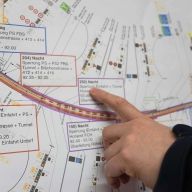
As soon as the night-time closure comes into effect at 9 pm, the rhythm shifts to single-tube operation with opposing traffic. This means that all traffic in both directions is guided in a single lane through the still-open tunnel tube. The closure runs until 4 am, after which everything must be open again. Work runs from Sunday night to Thursday night — five nights a week.
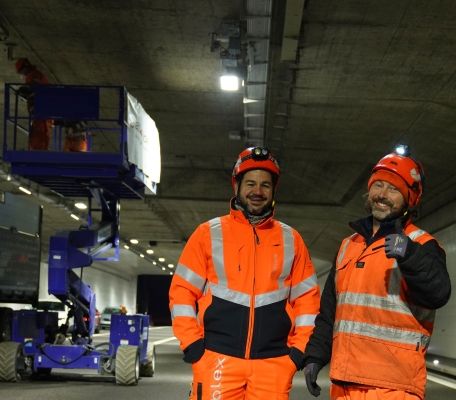
From March to the end of June 2026, this phase alone adds up to more than 100 closures — across all the project years since 2017 the figure is significantly higher. In the Honeret section alone, four to six people are deployed on both day and night shifts.
What cablex is delivering in the Honeret section.
Lot D4-6 covers the installation of new signal gantries and all signalling along the Northern Bypass of Zurich.
The new signalling system enables the police traffic management centre (VMC) to control traffic on this motorway section in a targeted manner and to respond swiftly to incidents. Road users are informed of disruptions in real time and redirected to alternative routes as required.
Der Auftrag von cablex beinhaltet die Montage aller Signalaggregate, deren Verkabelung sowie den elektrischen Anschluss und die Inbetriebnahme sämtlicher Signale entlang des Abschnitts.
The units comprise:
- Lane control signals (LCS: the familiar green arrows and red X’s)
- Variable message signs – LED/prism variable signs (speed signs and hazard warnings)
- Full-graphic LED information signs
- Static signalling: traffic lights, flashers
- Traffic detectors (TD)
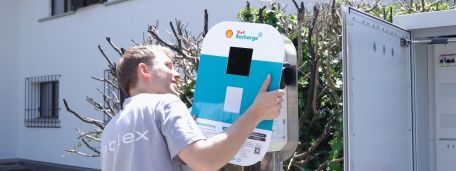
cablex handles the complete assembly, cabling and commissioning — from the supply installation to the fully connected and tested signal. Partners Signal AG and Walter AG deliver their materials to the central installation site.
To put the scale in perspective: across the overall Northern Bypass of Zurich project, cablex has so far installed more than 2,000 signals, built the fibre-optic network along the entire route — from the approach zone deep into the Gubrist tubes — and installed and commissioned around 90 CCTV cameras across more than 20 kilometres of route.
Once the signalling is complete, the road surface is renewed. That is how the renovation progresses: trade by trade, section by section, without ever completely interrupting motorway operations.
Patrick Baumberger, project manager Tunnel Honeret:
"The optimal use of the track possession windows had to be coordinated on a weekly basis with our teams and the available infrastructure. The removal of existing elements, as well as the installation of new components both outdoors and inside the tunnel, placed significant demands on the personnel on site and required the full extent of their expertise."
Another chapter in a long story.
The A1 between the Limmattal interchange and the Zurich-North junction is one of the busiest motorway corridors in Switzerland: over 120,000 vehicles a day, congestion on 350 days a year. The federal government is investing around CHF 1.5 billion in expanding the Northern Bypass of Zurich — a new third Gubrist tube, the renovation of the existing tubes, and the expansion to a continuous seven lanes. How to deliver that without ever stopping traffic completely: that is the real engineering achievement.
For cablex, the story began in 2017 with the first lot on the open section between Seebach and Affoltern. This was followed by fibre-optic installations and signal assembly in the new third Gubrist tube (opened April 2023), the Dietikon–Schlieren section, the Zurich North junction through to the Affoltern interchange including the Stelzen and Katzensee tunnels, and then the rehabilitation of the second tube — which is now back in operation.
The Honeret section is the next chapter in this story: the last section in the open area. After that comes the first Gubrist tube — a complete internal rebuild: carriageway, drainage, utility ducts, and all operational and safety equipment. cablex has already been designated for this phase.
The first Gubrist tube has been in service since 1985 — making a comprehensive renewal well overdue. After the defect-free completion of the third tube, project manager Enos Pizio summed it up:
"We are proud that cablex, with great dedication, has been able to make an important contribution to the development of the infrastructure on one of Switzerland’s most heavily used routes."
What this means for infrastructure managers.
cablex brings three things to this environment:
- Experience: on this project since 2017. The specialist knowledge and experience stay within the company — because all work is carried out by our own employees.
- Process discipline: more than 100 night-time closures in this project phase alone (300 closure nights in total), coordinated with traffic management, material deliveries and follow-on trades — without interrupting operations.
- Continuity: awarded the follow-on contract for the first Gubrist tube. Because building trust in critical infrastructure takes time — and is worth it.
Next stop: First Gubrist tube.
Once the Honeret section is complete and the road surface renewed, the final major phase of the Northern Bypass will begin: the renovation of the oldest Gubrist tube. Complete internal rebuild, new drainage, new operating technology, new signalling. In 2027, cablex will be there too.